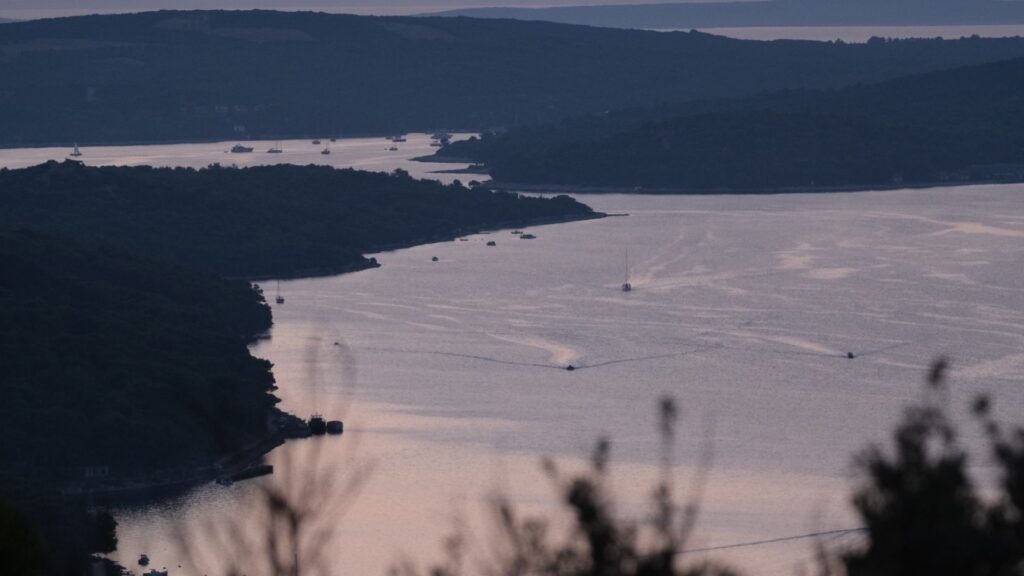
A guide to sailing in Croatia.
Everything you need to know about your charter.
What are the sailing conditions like?
The sailing season in Croatia runs from April to November, and is quite long. The best time to visit Croatia depends on the type of vacation you’re looking for. In the peak summer months of July and August, temperatures typically hover around 30°C (86°F). This is a great time to charter in Croatia. In May/June and September/October, temperatures typically drop to around 23°C (73°F). The season will affect the price of your charter.
Summer winds in Croatia blow primarily from the northwest (Mistral and Tramontana), reaching average wind speeds of 7 to 8 knots, which increase to a comfortable force 4-5 (10 to 20 knots) on some afternoons, ensuring exciting sailing fun. It’s important to regularly check weather forecasts when sailing in Croatia to avoid being caught off guard by the „Bora,” a northeasterly wind. September and October provide suitable winds for sailing, with extended periods of Bora (a strong northerly wind) and Scirocco (a humid east-southeast wind).
During peak season, charters typically run from Saturday to Saturday.
What are the main costs to consider when planning a boat charter?
What are the costs of mooring in Croatia?
A mooring buoy costs around 20 to 60 euros per night. This ensures privacy on all charters in Croatia. Mooring in a city port or marina costs more, around 40 to 200 euros per night. Catamarans usually offer a 50%-100% increase (they offer freshwater refills, shore power, as well as showers, toilets, restaurants, and cafes). It’s best to mix options to achieve a balance of both during your charter week.
Please note that the cruise date and boat size may affect the mooring price.
Exploring Croatia and mooring in locations slightly away from the main tourist towns and marinas usually makes chartering a yacht in Croatia more affordable.
Anchoring in Croatia is free, except in a few places where a fee will be charged.
You can check prices at ACI Marinas directly on their website.
Reservation
We recommend booking several days in advance. It’s almost impossible to find a spot late in the afternoon.
How do I book a place online?
It’s good to know that most of the larger marinas on the Adriatic, such as Marina Baotić, all 22 ACI marinas, and Marina Frapa in Rogoznica near Šibenik, allow you to book a spot by sending a simple email, offering the option of calling the marina directly. You can also try calling the marina reception or booking a spot through MySea, the ACI Marinas app, or Porthop.
What are the fuel costs?
Fuel costs depend primarily on the sailing route. Chartering a sailing yacht can significantly reduce fuel consumption. Take advantage of the wind and sail in the mornings and afternoons, when sailing conditions are most favorable.
Costs vary by boat; smaller boats use less fuel than larger sailboats and catamarans, especially if equipped with a generator.
Approximate fuel costs:
Sailboats up to 45′ 150 – 200 €/week
Sailboats over 50′ 200 – 350 €/week
Catamarans up to 45′ 300 – 400 €/week
Catamarans over 45′ 500 -1000 €/week
Motor yachts are large consumers of fuel compared to sailboats and catamarans, and fuel consumption is a major additional cost.
Food and drinks
On a bareboat charter, people typically prepare breakfast and lunch on the boat and eat dinner outside at local restaurants and tavernas. If you choose to dine in, you can expect to pay €30-50 per person, though this can be significantly more expensive if you’re dining at a more upscale restaurant. You can pre-order food and drinks to be delivered to the boat, or you can prepare your own supplies upon arrival at nearby supermarkets; this is the most popular option.
We recommend purchasing water and beverages for the entire week and food for the first two days. You can purchase fresh produce from local shops on the islands for the rest of your charter.
Keep in mind that if you hire crew, you must ensure they have three meals a day, at least one of which should be cooked. When chartering a yacht with crew and paying an Advance Provision Allowance (APA), the APA covers all these costs. This represents 20-30% of the yacht charter price.
What other costs should be considered?
A council tax will be charged for each person on your yacht, including the skipper. This tax is determined based on the number of days you will be travelling.
Car parking is not included in the yacht rental price. It is an additional cost, payable directly at the marina reception. Approximately €50-70 per week per car.
There are usually optional extras that can be added to the sailing itinerary. For example, stand-up paddleboards, snorkeling equipment, or even a Sea Doo underwater scooter. For pricing, check your charter’s website.
A residence permit in Montenegro will cost around €250.
Early boarding costs around €200.
If you want to make a one-way trip and leave the boat at another marina, you should consider an additional one-way fee of €500.
What types of charters are there? How do you choose the one that’s best for you?
Bareboat Charter: A bareboat charter allows you to rent a yacht without any crew. This means you are responsible for steering and navigating the yacht yourself, including all aspects of safety and maintenance. Please note that this type of charter requires a sailing/motorboat license and a radio operator’s certificate.
Crewed Charter: A crewed charter provides a professional crew to handle all aspects of yacht management and maintenance, leaving you free to relax and enjoy your vacation without any responsibilities.
Skippered Charter: A skippered charter provides you with a professional skipper who will steer and operate the yacht for you while you take care of other aspects of your charter.
Cabin Charter: A cabin charter allows you to rent a cabin on a yacht with other passengers. This is a great option for those who want to experience a yachting vacation but don’t have the budget to charter a whole yacht.
Choosing the best type of charter depends on many factors, including your preferences, budget, and level of experience. Here are some questions to consider when choosing a charter:
Do you have sailing experience? If you’re an experienced sailor or have experience operating motor yachts, you may prefer a bareboat charter. If you’re less experienced or prefer to relax and let someone else handle the details, a crewed or skippered charter may be a better option.
What’s your budget? Different types of charters come with different costs. Bareboat charters are typically the most affordable, while crewed charters are the most expensive. Cabin charters can be an even more affordable way to spend your yachting vacation.
What’s your preferred level of involvement? If you want to completely step away from work and enjoy a stress-free vacation, a crewed charter may be the best option. If you want to be more involved in the operation of the yacht, a skippered or helmsman charter may be a better option.
How to choose a charter base for your trip?
The choice of base depends on your preferred charter location. Keep in mind that charter prices may vary depending on the charter base. If you’re undecided on a specific sailing area, this can be a good way to save money on your trip.
Here are some of the best charter bases in Croatia:
Marina Kastela
Split ACI Marina
Marina Frapa
ACI Marina Dubrovnik
What is the best sailing region in Croatia?
You should definitely consider starting your sailing journey somewhere around Split. It’s one of the most popular sailing destinations in Croatia, but it’s definitely worth sharing with other boats. This area is home to some of Croatia’s most beautiful islands, such as Hvar, Brač, and Vis. These islands boast stunning beaches, historic towns, and a vibrant nightlife. There are countless sailing routes to choose from.
How to choose the type of charter boat?
Choosing the type of boat to charter ultimately depends on your personal preferences, sailing experience, and the type of experience you are looking for.
There are three options you need to consider:
Motor yachts are generally faster than sailboats, meaning you can cover greater distances in less time. They also offer the convenience of reaching various destinations quickly and easily, without having to worry about wind and weather conditions. Unfortunately, these benefits come at the cost of high fuel costs. Motor yachts are designed to provide a stable and smooth ride, which can be beneficial for those prone to seasickness or who prefer to avoid the motion of the ocean. Motor yachts are typically equipped with a range of onboard amenities, such as water toys, diving equipment, fishing gear, and more.
Sailboats are the best choice for those looking to combine fun with relaxation. Sailing can be a more peaceful and serene experience, as you glide across the water, propelled by the wind and the sound of the waves. Sailboats are more environmentally friendly because they use wind power rather than fuel.
Catamarans offer plenty of living space and are often more comfortable than monohulls. They have a wider beam and multiple levels, providing more room for relaxing, socializing, and sleeping. Due to their wider beam, catamarans are more stable than monohulls. They don’t heel as much in strong winds or rough seas, which can be more comfortable for some people, especially those prone to seasickness. If you’re traveling with a family or group, a catamaran may be a better choice, as it offers more space and stability. Furthermore, many catamarans have trampolines and other features that may appeal to children.
Many sailors believe that monohulls offer a better sailing experience than catamarans due to their heeling and wind response. They offer a better „feel” of the water and wind, which can be an exciting and engaging experience for those who love sailing. Generally, monohull rentals are less expensive than catamarans, especially for smaller groups. If you’re on a tight budget or want to save money, a monohull may be a more affordable option. If you’re looking for a more traditional sailing experience, a monohull may be the right choice. Monohulls have been used for centuries and offer a classic and timeless sailing experience.